

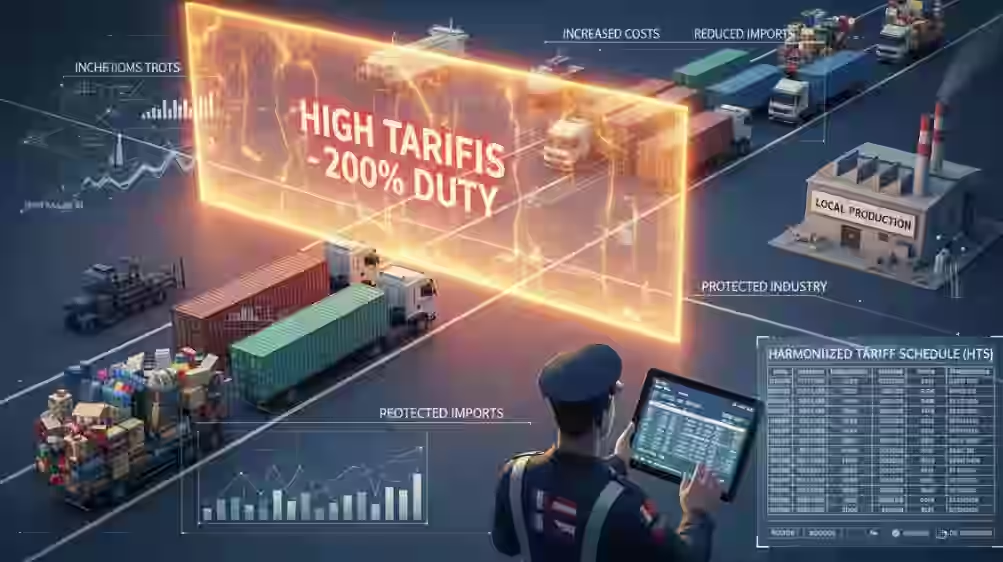
In the current trade climate, HTS classification is no longer an administrative task—it is a high-stakes financial strategy. A single digit difference can trigger a 25% duty hike.
With the 2026 regulatory environment favoring strict protectionism and domestic manufacturing incentives, Customs and Border Protection (CBP) has intensified its scrutiny of import classifications. The era of "close enough" is over. Today, the difference between HTS code 8517.62 (Free) and 8517.69 (High Duty) is often a matter of technical engineering, not just description.
The "Tariff Engineering" Advantage
Many importers resign themselves to paying high duties, assuming they are fixed costs. Velaxis Global challenges this assumption through Tariff Engineering—the legal modification of a product to qualify for a lower duty rate.
For example, adding a simple textile component to a predominantly plastic shoe can shift the classification from a 20% duty category to a 6% category. This is not evasion; it is compliance with the specific definitions of the Harmonized Tariff Schedule.
- • Material Breakdown: We analyze the "Essential Character" of your goods. Is your product defined by its steel frame or its electronic component?
- • Functionality: Does your machine perform a "specific function" not elsewhere specified (NES)? That distinction saves millions.
- • Set Provisions: Are you importing a "retail set" or individual components? The duty rate often depends on how it is packaged.
The Binding Ruling Strategy
Uncertainty is the enemy of profit. If an HTS code is ambiguous, you risk a retroactive audit that could claw back duties from the last five years.
Velaxis mitigates this via Binding Rulings. We submit legal briefs to CBP on your behalf before you ship. Once CBP issues a ruling, that classification—and its associated duty rate—is locked in legal stone. You gain absolute cost certainty in a volatile market.
"We don't classify based on what your marketing team calls the product. We classify based on what the engineer built. That distinction is where the savings are found."