

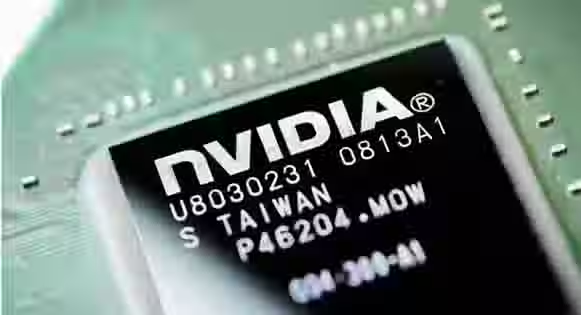
As of January 15, 2026, the trade landscape for high-tech imports has shifted. A new executive order has imposed a 25% tariff on a "narrow range" of advanced computing semiconductors, specifically targeting high-performance units like the Nvidia H200 and AMD MI325X.
However, the nuance of this Section 232 action lies in the exemptions. The administration has explicitly carved out protections for chips used in data centers, consumer applications, and domestic manufacturing support. For supply chain directors, this creates an immediate need for precision in HTS classification and end-use certification.
The Velaxis Perspective: Compliance as Strategy
This order introduces a binary risk to your landed cost models. The difference between a 25% margin hit and a duty-free entry now depends entirely on your ability to prove the "end-use" of the silicon.
"Ambiguity is the enemy of profit. In this new regulatory environment, the burden of proof is on the importer to demonstrate that their high-performance chips feed the protected data center ecosystem."
Actionable Steps for Importers
- Verify HTS Codes: Ensure your broker is not applying a blanket classification. Specific derivative products for R&D are exempt.
- End-Use Documentation: Prepare "Defense Files" for every shipment containing advanced processors.
- Watch Critical Minerals: The order also flagged processed critical minerals for trade negotiations.
Audit Your Exposure
Don't overpay on duties. Let Velaxis review your HTS classifications today.
Request Tariff Audit