
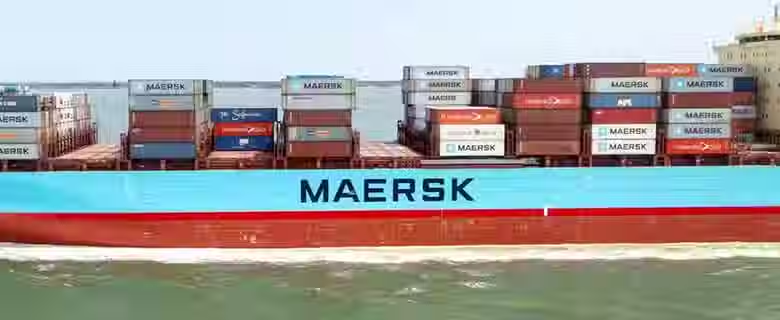
The dissolution of the 2M Alliance — the long-running vessel-sharing partnership between Maersk and MSC — continues to work through the market this year, with both carriers now operating independent service networks rather than a shared one.
What Changed
Under 2M, the two carriers pooled vessel capacity across shared services, giving shippers booked with either line access to a combined network. Operating independently means each carrier now runs its own schedules and capacity allocation, which has introduced some uncertainty around service coverage on lanes both companies previously served jointly.
What Shippers Have Observed So Far
- Both carriers have launched independent services with broadly similar overall coverage, easing the worst-case concerns about lost routes
- Some schedule adjustments and reshuffling have occurred as each carrier optimizes its own network rather than a shared one
- Capacity discipline has become more carrier-specific, contributing to some of the lane-by-lane rate divergence seen across the market this year
What to Watch Going Forward
As each carrier continues refining its independent network, shippers with contracts tied to either line should periodically reconfirm that their regular routing and transit time commitments still hold, rather than assuming continuity from the shared-alliance era.
An alliance breakup this large doesn't happen all at once — it plays out over months as each carrier rebuilds its own network. Assuming 'nothing changed' is the riskier assumption right now.