
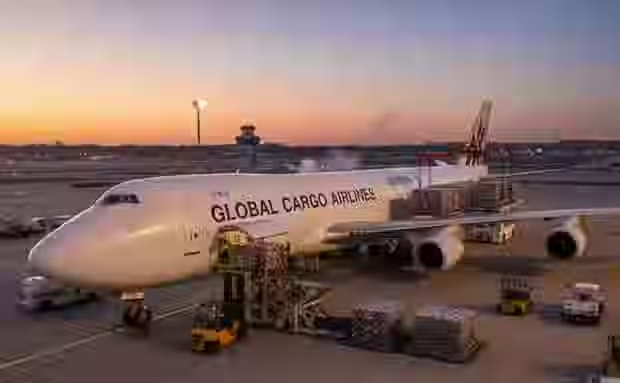
While ocean freight rates have grabbed most of the attention this peak season, air cargo capacity has remained quietly constrained on transpacific lanes, with tariff-driven shipping patterns and continued high-tech demand keeping rates elevated even as ocean rates show signs of a coming correction.
What's Keeping Air Capacity Tight
- Shippers with tariff-sensitive or time-sensitive cargo shifting to air to beat policy deadlines, adding demand air carriers weren't necessarily planning for
- Continued strong demand from high-tech and electronics shipments, which have historically been heavy users of dedicated air cargo capacity
- Belly-cargo capacity on passenger aircraft not fully recovering to pre-disruption levels on all routes, limiting the total available lift
What This Means for Shippers
Unlike ocean freight, where a Q3 rate correction is broadly anticipated as front-loading eases, air cargo capacity constraints tied to structural belly-cargo limitations and sustained high-tech demand may not ease on the same timeline.
Ocean freight rates are cyclical and tend to correct. Air cargo capacity constrained by structural factors, like reduced belly-cargo lift, doesn't necessarily follow the same cycle.
If you're relying on air freight as a release valve for tariff-sensitive shipments, it's worth confirming current transit times and rates rather than assuming pre-2026 air freight economics still apply.