
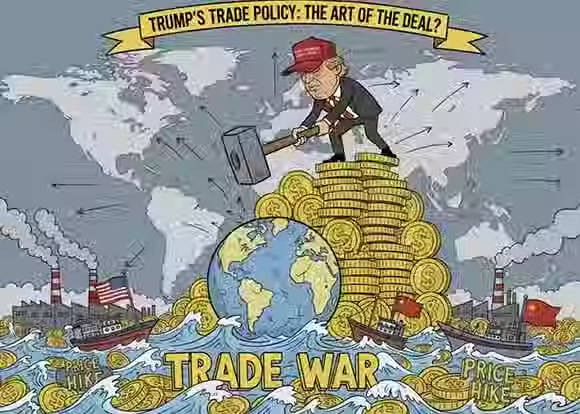
Executive Order 14389, signed in February 2026 following the Supreme Court's IEEPA ruling, ended certain ad valorem duties that had been imposed under that authority. For importers trying to figure out exactly what changed, the order's scope is worth understanding directly rather than through secondhand summaries.
What the Order Did
The order ended specific ad valorem duties implemented under IEEPA-based executive orders, responding directly to the Court's finding that broad, economy-wide tariffs exceeded the President's authority under that statute.
What the Order Explicitly Did Not Do
- It left in place the underlying national emergency declarations tied to fentanyl and border-security executive orders, even while ending certain duties associated with them
- It did not address the de minimis exemption suspension, which rests on separate legal authority
- It did not affect tariffs imposed under Section 301 or Section 232, which were never part of the IEEPA framework the Court reviewed
Why the Distinction Matters for Your Compliance Team
Treating this as a general tariff rollback rather than a specific, scoped action risks missing continued exposure on the many tariff lines that were never covered by the order in the first place.
Reading the actual scope of an executive order, rather than the headline summarizing it, is the difference between an accurate compliance update and a costly assumption.