
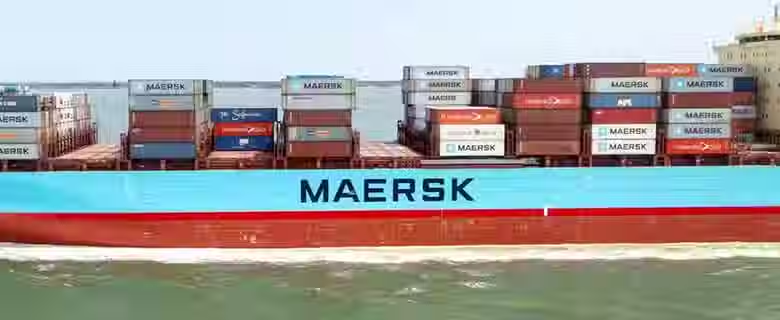
Container carriers have restarted select Red Sea services in 2026 after a prolonged period of Cape of Good Hope diversions, and new infrastructure investment — including a semi-automated terminal near the Suez Canal's southern entrance — signals confidence that traffic will continue returning. But the reopening remains cautious rather than settled.
Where Things Actually Stand
- Select carriers have resumed Red Sea routings, including reefer services connecting India, the Middle East, and the US
- New port infrastructure near the Suez Canal has opened to support the traffic increase
- Regional monitoring bodies have extended reporting requirements on the security situation rather than closing the file, reflecting continued uncertainty
Why 'Reopened' Doesn't Mean 'Resolved'
The underlying regional tensions that drove the original diversions to the Cape of Good Hope route have not fully resolved. Shipping traffic resuming reflects a calculated risk assessment by carriers, not a declaration that the risk has disappeared — and that risk assessment could shift again with regional developments.
What This Means for Routing Decisions
Shippers who shifted permanently to Cape of Good Hope routing during the worst of the disruption may find Suez transit economically attractive again given the shorter transit time, but should build contingency routing into contracts rather than assuming Red Sea transit will remain reliably available for the full contract term.
A route reopening cautiously is not the same as a route being safe long-term. The right posture is flexibility, not a bet on either direction holding.