
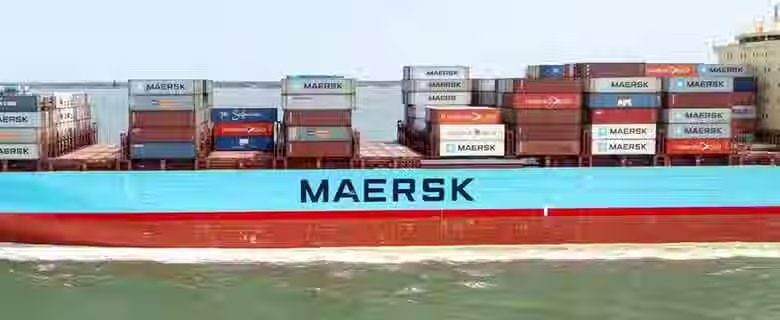
Renewed regional tension in the Middle East has marine insurers reassessing war-risk premiums for vessels transiting the Strait of Hormuz, a chokepoint for a significant share of global oil and gas shipments and a route many container and bulk carriers also rely on.
How War-Risk Insurance Actually Works
Marine war-risk coverage is priced separately from standard hull and cargo insurance, and premiums are reassessed dynamically based on current threat conditions in a given transit zone. When regional risk increases, premiums for that specific route rise, and insurers may add reporting or notification requirements for vessels transiting the area.
What This Means for Freight Costs
- Higher war-risk premiums are typically passed through to shippers as part of the overall freight rate on affected routes
- Some carriers may reroute away from higher-risk chokepoints entirely, adding transit time but avoiding the premium
- Rate volatility on affected lanes can move faster than typical commercial supply-and-demand surcharges, since it's tied to geopolitical developments rather than shipping market fundamentals
What Shippers Can Do
For cargo moving through or near affected chokepoints, it's worth asking your carrier directly whether war-risk premiums are currently being applied to your specific routing, rather than assuming your quote already reflects the latest risk assessment.
Geopolitical risk premiums move on their own timeline, independent of the commercial freight market. A quote that was accurate last week may not reflect this week's risk assessment.