
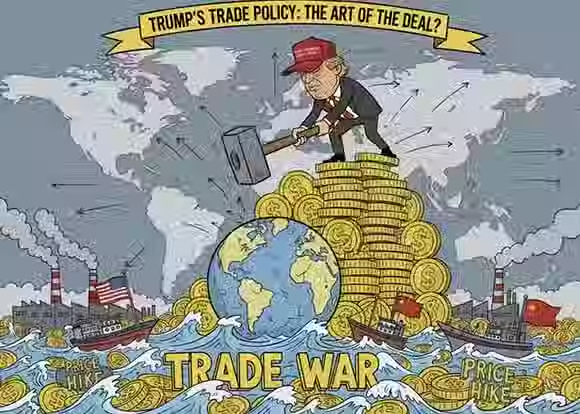
In February 2026, the Supreme Court ruled that the President exceeded his authority by imposing broad, economy-wide tariffs under the International Emergency Economic Powers Act (IEEPA) without clear congressional authorization. For importers who'd spent over a year adjusting to IEEPA-based duties, the ruling raised an obvious question: does this mean tariffs are going away?
What the Ruling Actually Covered
The Court's decision was narrow and specific — it addressed the legal authority used for certain sweeping, economy-wide tariffs, concluding IEEPA doesn't authorize that kind of broad action without Congress. It did not strike down tariffs imposed under other legal authorities, such as Section 301 or Section 232, which rest on different statutory grounds entirely.
What Followed
Executive Order 14389, signed shortly after the ruling, ended certain ad valorem duties that had been imposed under IEEPA, while explicitly leaving in place the underlying national emergency declarations and other measures adopted under related executive orders. In practice, this meant some tariffs came off, while country-specific and product-specific actions under other authorities continued largely unaffected.
What Importers Should Actually Check
- Whether your specific tariff line was imposed under IEEPA (potentially affected) versus Section 301/232 (not affected by this ruling)
- Whether E.O. 14389 explicitly addressed your product category, since the order's scope was specific rather than blanket
- That related programs, like the de minimis suspension, were NOT addressed by this ruling and remain in effect on separate legal grounds
A Supreme Court ruling that sounds sweeping in headlines can still be narrow in practice. The authority struck down and the authority still standing are not the same thing, and conflating them leads to bad compliance decisions.
If you assumed this ruling reversed all of your 2025-2026 tariff exposure, it's worth a specific recheck of which legal authority actually applied to your affected HTS codes.